
Friction vs. non-friction
The function of friction; friction-maxxing; automating annoying tasks; keeping ourselves human

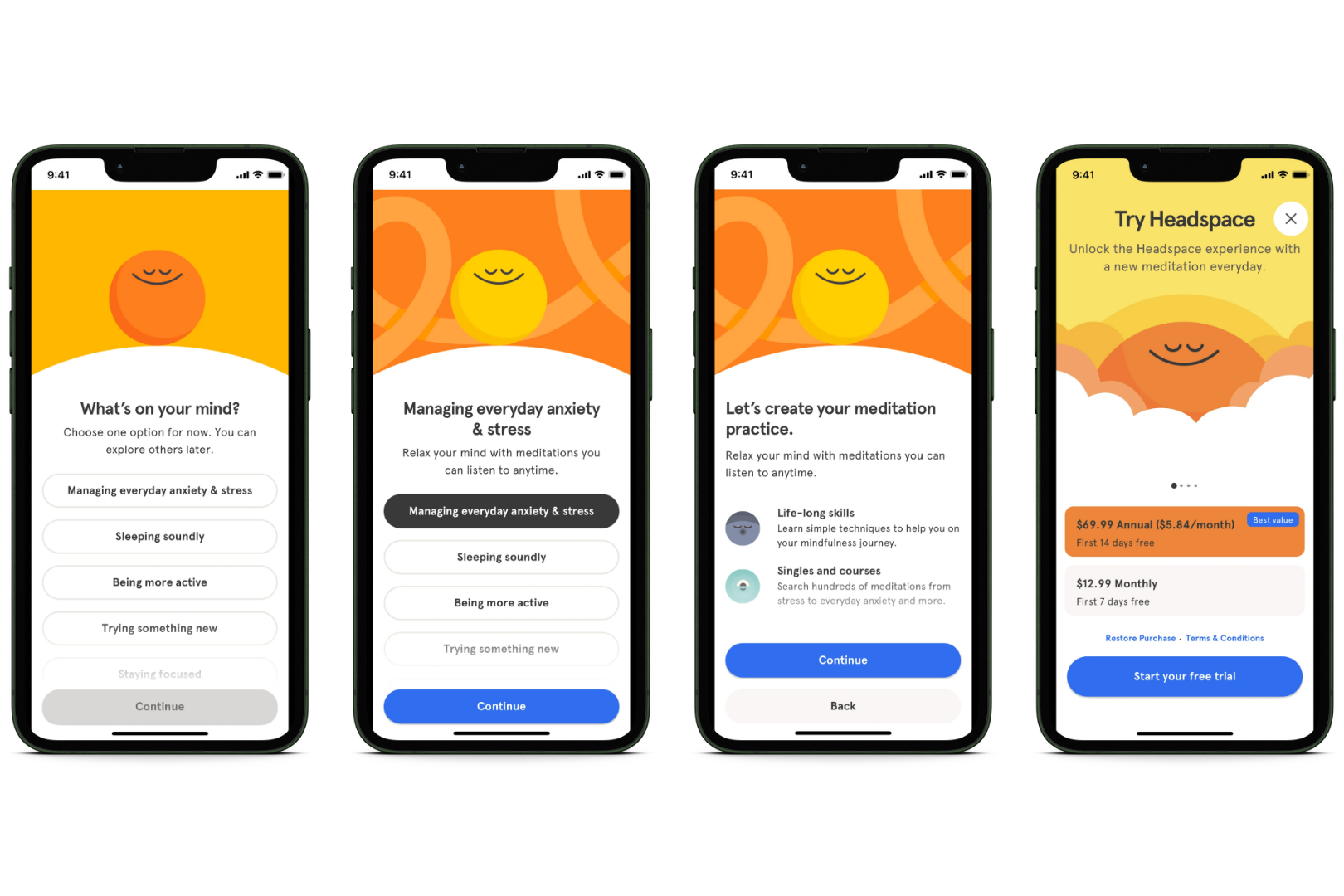
My job involves a lot of thinking about friction. Too much friction and a user drops out of a process; too little and they won’t feel invested in the first place. If you’re signing up for an app and have to swipe through a ton of screens, create login details, get a verification code, leave the app to find the verification code, come back to type it in, enter in even more details – at some point you might just quit. On the other hand, if you’re just given a sign-up screen without information about what the app offers, or no options to customise your experience, you’re also less likely to sign up or keep using it.
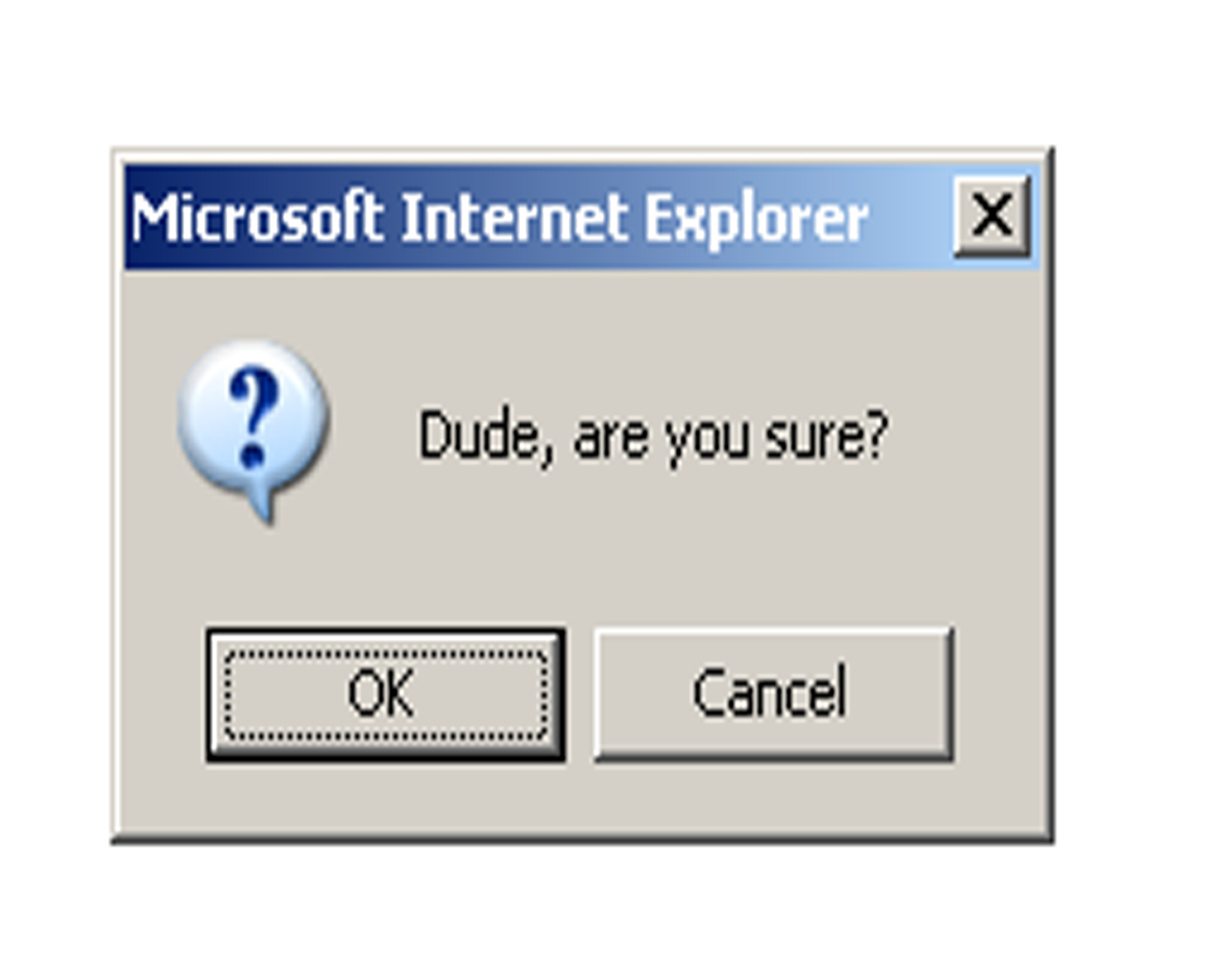
Friction also keeps you from missing important information or doing something too quickly. Before you buy an eSIM, you should have to confirm your phone is unlocked: this is a drop-off point, but a necessary one, since you can’t use an eSIM with a locked phone.
That said, the user missing something important is sometimes the goal: I remember how surprised I was when, in a postpartum haze of needing baby supplies delivered ASAP, I found myself signed up to Amazon Prime after one click, as if by magic. Before I had time to second-guess myself, I’d subscribed. Online retailers want to make it as easy as possible to go from thinking about buying something to buying it, which is why they offer to keep your card and address on file. Still, when you expect a confirmation screen before money actually leaves your account, a completely frictionless experience like Amazon’s one-click shop can feel a little scummy.
Lately, AI is promising to reduce friction across all areas of life – not just internet-based processes. Let ChatGPT settle an argument with your partner! Automatically translate roadsigns while you’re travelling while wearing Ray-Ban Meta AI glasses! What I find interesting about this period of mass-AI adoption and increasing AI capability, where automating away annoying life admin is within our grasp, is that there is a parallel resurgence of high-friction, ‘analog’ technologies.
You can now build a website with a one-sentence prompt, but Neocities – a web hosting service in the style of Geocities – hosts 1.5 million websites painstakingly crafted with HTML and CSS (here’s mine). Google Analytics shows a spike in searches for iPod Nanos and MP3 downloads. Today’s twentysomethings crave an unalgorithmic existence they’ve really never known; they want to log off. ‘Friction-maxxing’, or ‘the process of building up tolerance for “inconvenience”’ is trending.
At the same time, use of generative AI is much higher among younger people, though that usage is not without ambivalence. The rise in ‘frictionful’ experiences reflects anxieties about AI, placing the user back in the driver’s seat: choosing what to listen to from a limited catalogue instead of consuming whatever the computer tells you to; romanticising the imperfect blurriness of a photo taken by a point-and-shoot camera; doing something hard you don’t have to do anymore so your brain doesn’t atrophy. Not giving in to the slop.
With the advent of all technology there is fear, but the fear here strikes at the heart of what it is to be human. What’s left when we automate everything? Is friction necessary for a meaningful life?
Good friction vs. bad friction
While it’s tempting to try to classify friction as ‘good’ vs. ‘bad’, friction simply exists as a fundamental feature of human existence, and can either help or hinder aspects of that existence. In my opinion, focusing on friction itself doesn’t get us to any interesting conclusions. On the one hand, friction is useful: taking notes longhand embeds information in your brain better than using an LLM to summarise a lecture recording for you to peruse later. You have to play scales over and over to learn an instrument. Getting better at stuff requires agitating at something difficult.
At the same time, frictionful experiences get in the way of other, worthwhile and human experiences. Things being harder or taking longer than they have to eats into our leisure time. I don’t think anyone would argue that it’s somehow better to wash your dishes by hand when you could just run the dishwasher and do something else at the same time, except as some kind of mindfulness exercise. Getting and staying in touch with friends is a lot easier than it used to be; making plans in theory is very simple. Of course cancelling those plans is also easier, as is ignoring your friends while you’re with them, but I think on the whole texting is probably a positive invention.
What seems more salient to me is that we tend towards the reduction of friction. While we can, again, use this to our advantage by making the things we want to do easier to start, or putting barriers in the way of time-wasting activities, for example, tech companies are also using it against us for profit. As Kathryn Jezer-Morton writes:
Tech companies are succeeding in making us think of life itself as inconvenient and something to be continuously escaping from […]. Reading is boring; talking is awkward; moving is tiring; leaving the house is daunting. Thinking is hard. Interacting with strangers is scary. […] These are all frictions that we can now eliminate, easily, and we do.
Beyond eliminating the minor inconveniences of human existence, the technologies we use often leverage friction against our best interests.1 Infinite scroll eliminates the friction of coming to the end of a page and having to decide whether to continue. Endless phone trees generate friction to keep you from contacting customer support.
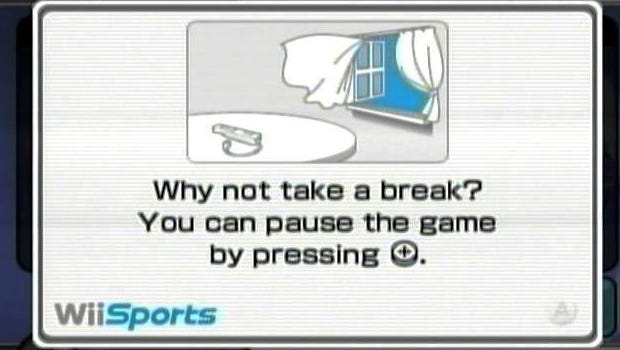
Choosing a frictionful experience, then, can feel like a way to reassert your own agency in the face of these corporations. Choosing to make your life hard instead of letting someone who wants your money make choices on your behalf. The impulse behind ‘friction-maxxing’ is to remind ourselves that we can do difficult things even though we now live in a world where we don’t often have to. As Derek Thompson writes in ‘The Anti-Social Century’,
Although technology does not have values of its own, its adoption can create values, even in the absence of a coordinated effort. For decades, we’ve adopted whatever technologies removed friction or increased dopamine, embracing what makes life feel easy and good in the moment.
It feels like we’re suddenly looking up from our phones and realising we don’t like the way the world looks with the value system we’ve unintentionally built. The values of the analog world seem more appealing; the way there, apparently, is to stop being afraid of things that take effort.
Fun friction vs. compulsory headache
Where friction-maxxing falls short is that friction is not, in and of itself, valuable or meaningful. While it seems obviously bad to view to view ‘life itself’ as inconvenient and annoying, some things are inconvenient and annoying. I wish I did not have to file taxes, for example. We don’t actually want things to be hard for the sake of being hard – that’s where all these technological solutions came from in the first place. And I think what we can miss in our discussions of friction or friction-maxxing or whatever is that innovation is good. When I was 12 I was obsessed with Kit Kittredge (the girls that get it get it etc). I begged my mom for a typewriter for Christmas so I could also be a Great Depression-core tween journalist, and then for a few months diligently typed on it until I quit, and now it gathers dust at my parents’ house.

I won’t say I’d write less if the typewriter was the only tool available to me for writing, but it would certainly take me a lot longer. Even with the distractions of the internet, writing on the computer is just a better experience. Backspace is great. Not getting your keys jammed is great. With the contemporary keyboard, we built a better tool, with literally less friction (my fingers used to hurt after typing for too long), that makes it easier to do the thing we want to do: write (or at least type).
So why did I want a typewriter so badly when it’s worse for what I actually wanted to do? Why were we all buying record players in 2014? So we could self-importantly post ‘listen mate, life has surface noise’ to our facebook walls?
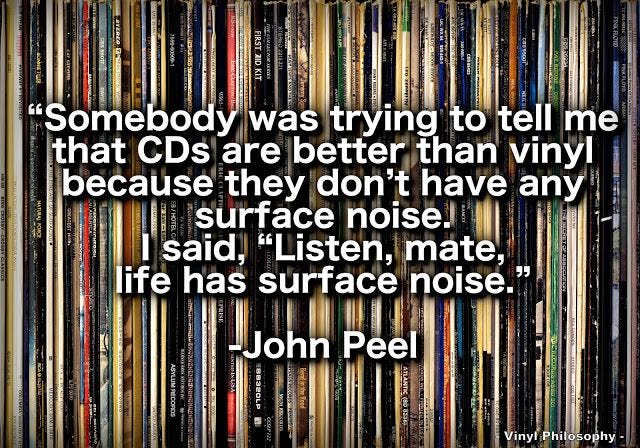
Because the surface noise can be fun when you don’t have to have it. Friction is enjoyable when it isn’t compulsory.
The theoretical example I keep coming back to is identifying bird songs. To really learn bird songs, you need to do it manually: hear a song, then go through a list of likely birds and play the songs until you match it. Doing this repeatedly will create the association in your brain needed to hear a song and go, ‘Oh, that’s a cardinal.’ This process is rewarding and, ultimately, enjoyable.
You don’t have to do any of that though: you can open Merlin Bird ID and press the microphone button and it’ll tell you all the birds you’re hearing right now.
Which of these options is better? The frictionless experience is worse if your goal is to learn the birds. It’s also probably less fun and less satisfying; more akin to googling something than solving a puzzle. But if I had to identify 10 birds based on their songs in order to unlock my car and drive to work in the morning, I’d sure as hell prefer my phone to do it for me.
So what’s the value of friction?
I think there are roughly three types of activities:
totally pointless activities
compulsory, meaningless activities
meaningful activities
The value of these activities doesn’t necessarily correspond to how much effort or friction they entail. A pointless activity could take a lot of effort, or could be a lot of fun – though that fun might then become the point, rendering it a meaningful activity. Whether an activity has a point or ‘meaning’ is also subjective: you may find enjoyment or value in something I do not. The point here is to largely sort the things we do into how we should expend effort on them: where do we want to use our limited tolerance for friction? What’s worth it?
Given this categorisation, we’d ideally approach these types of activities in a specific way:
1. Stop doing the pointless activities. This first requires recognising that they’re pointless, which is easier said than done.
2. Automate or reduce the friction from the compulsory, meaningless activities. By ‘meaningless’ I mean things that do not add value to your life. Doing my taxes and going to the supermarket are tasks I would very happily outsource without, I believe, making my life worse. But some people find meaning in doing those things themselves – this is a subjective metric.
3. Concentrate our limited bandwidth of time and energy on meaningful activities. This is dependent on treating the previous two points. It’s unrealistic to expect to never do stuff you don’t want to do in life, and that’s not what I’m arguing for, but given the shortness of human existence, we should be trying to push as much stuff that is devoid of meaning into the category of ‘stuff you do not have to do’. Don’t waste your life scrolling but don’t also waste it waiting in line at the DMV if you can help it.2
Where we’re backfiring at the moment is spending a lot of time making pointless stuff easier, when we should just stop doing it entirely. Recently I spent over an hour cleaning out my downloads folder, and only after I wondered if I should be getting an AI agent to do it for me did I wonder if it was worth doing at all. I see this a lot at work: the easier low-stakes, productive-seeming tasks become, the more of them we’re expected to do, and then we fill our time replying to Slacks or updating work trackers rather than doing our actual work.

‘Friction-maxxing’ also lives here. Just doing frictionful activities will not re-inject meaning into your life if those activities are not, in themselves, meaningful. Now, again, you decide what is meaningful to you. Some pointless stuff might seem worth it, or even teeter on the edge of meaningful, but I’m a fan of Oliver Burkeman’s idea that we should embrace our limitations and bin off anything that isn’t the most important.3
In his piece on ‘Zombie Flow’, Derek Thompson concludes, ‘Life is supposed to be the right kind of hard.’ If you want a life full of meaningful, effortful experiences, you don’t need to build tolerance by doing unrelated and meaningless effortful tasks. You can just start doing the hard stuff you care about and stop doing the easy stuff you don’t. Put down your phone and start actively trying to live the life you want to live, whatever that looks like. The good news if you’re keen on friction is that this is the effort of a lifetime – of your life, really: trying, starting over, and trying again.
Thanks for reading. I’ve been chewing on this essay for a while, and I actually have more to say on the topic. My next post will focus on friction in the context of AI: what we should worry about in a frictionless, AI-fuelled future, as well as the benefit of friction in AI development. If that sounds interesting to you, please subscribe if you haven’t already.
In UX, this is called a ‘dark pattern’ and is something designers by and large try to avoid!
Some stuff we’ll never be able to automate, for which I suggest a 4th approach: learn to find pleasure or meaning in the things you have to do. See this article on waiting in line.
The most attractive pointless activities are those that make you ‘feel productive’, such as cleaning out your downloads folder. When I compare this, however, to the ‘unproductive’ activity of shoving my face as close as possible to the face of my infant son, the idea that productive = meaningful starts to break down.
Loved this, Hannah! I came across this article via a google search trying to see if others have written about the contrast between Gen Z being the biggest group using AI, but at the same time responsible for “analog living” and friction-maxxing trends. Was so glad to find this and very much agree with your ideas.
I would consider myself an AI optimist and view it as something that will (or at least, could) have a positive impact on society. I also think if we halted all AI advancement today, we'd have at least 20 years before we really figured out how to use its full potential.
I think in order to have really positive experiences with AI, we need to figure out how to engineer friction into AI experiences to introduce accountability, ownership, and encourage some deeper thinking & user participation.
But as you mentioned, friction is not inherently good/bad, and good friction is different for everyone, so I guess the question becomes how do we decide what friction is worth keeping, especially in AI where the goal is usually to remove it?